Our Approach:
Designing Solutions that Reinforce Solutions
The Systemic Approach to Support.
Not Every Missed Payment Means the Same Thing
Traditional rental systems often respond to a missed payment with the same enforcement process regardless of why it happened. But a household experiencing a temporary financial disruption is not in the same situation as a household whose rent is chronically unaffordable.
Treating different problems as though they are the same can turn a temporary setback into a lasting crisis.
Agape's Tenant Stability Program is designed around that distinction. When a tenant who can normally sustain their rent experiences a qualifying short-term disruption, the program can provide time and structured support before that disruption becomes an eviction.
Start With Housing, But Don't Stop There
Housing is one of Agape's first intervention points because stability requires somewhere to live. But the need is not simply for more structures. The need is for housing that people can actually use: housing of the right quality, type, location, and price.
West Virginia illustrates the distinction clearly. The state has experienced long-term population decline while still facing housing shortages and mismatches. Across the state, more than 143,400 households are housing cost-burdened, and more than 67,500 spend over half their income on housing.
The problem also affects economic development. West Virginia housing stakeholders report that housing-job imbalances make it harder for businesses to recruit and retain workers, while tight markets make it difficult for workers across income levels to find housing appropriate to their needs.
Housing therefore cannot be separated from economic opportunity. A home helps a person remain in a community. Employment and opportunity help make remaining there sustainable. Each strengthens the other.
No Single Solution Is Enough
Population decline can make it appear that West Virginia should already have more housing than it needs. The reality is more complicated. A house can exist without being available, affordable, safe, or suited to the people who need it.
West Virginia's 2025 Housing Needs Assessment found housing gaps in every region of the state. Even communities with relatively high vacancy can lack housing of the right quality, type, location, and price.
That distinction matters to Agape.
Housing cannot be considered separately from the people who need it, the jobs and services they need to reach, or the communities in which they want to live. A community can have empty buildings and still have families who cannot find an appropriate home.
Think of It Like Building a Structure
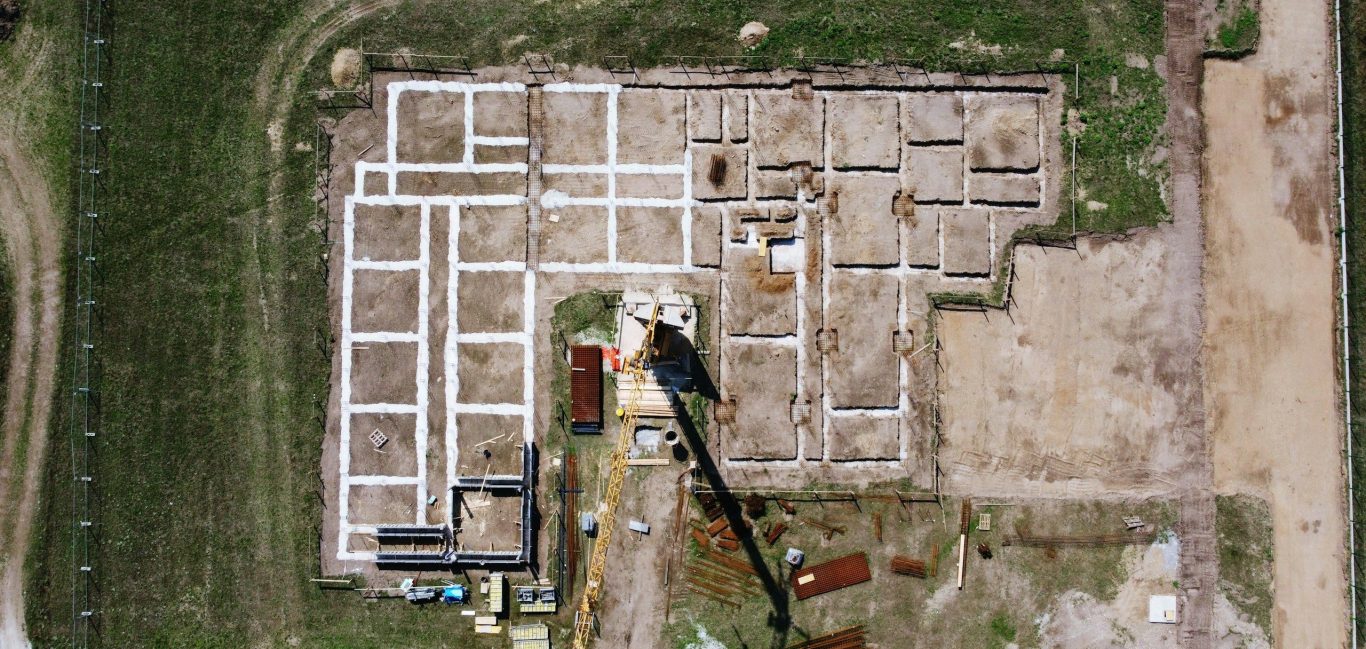
Concrete may form the foundation, but concrete alone does not make a building. Reinforcement gives it strength. Forms give it shape. Other materials protect it from weather and time. Each performs a different function, but the structure depends on those functions working together.
Agape approaches community revitalization the same way. Housing, economic opportunity, financial stability, existing community assets, local knowledge, and partnerships are not separate problems requiring isolated solutions. They are parts of one system.
No one organization, government, business, or community member has to do everything. Each can contribute what it does well. Agape's role is to help connect those contributions so that one solution strengthens the next.

Dignity is not a program feature. It is the foundation the entire model stands on.
How the Tenant Stability Program Works
Each Agape property maintains a dedicated Tenant Stability reserve. The reserve is built into the operating model so that temporary financial disruptions can be addressed before they become housing crises.
When a tenant experiences a qualifying short-term financial emergency, they may access the reserve to cover the temporary shortfall. Assistance is repaid through a structured repayment agreement with zero interest and no fees to the tenant. Every dollar repaid returns to the reserve and becomes available to help another household.
The fund is designed to replenish itself. Every dollar repaid restores capacity for the next emergency, allowing one pool of resources to support multiple households over time.
Program Safeguards
- A tenant's outstanding TSP balance may not exceed 125% of their monthly rent. If additional assistance would exceed that limit, Agape works with the tenant and available partners to help address the remaining need.
- A payment of at least $1 toward the outstanding TSP balance, in addition to the rent due for that month, keeps the repayment agreement active.
- Proactive tenant communication is the primary eligibility trigger
- The program uses human review, not automatic enforcement
Built for Temporary Disruptions
The Tenant Stability Program is designed for people who can normally sustain their housing but encounter a temporary disruption. Its safeguards protect the reserve while allowing room for real life. A repayment target creates accountability, but a temporary setback does not automatically end the agreement. Continued communication and participation matter because the goal is to restore stability, not turn one difficult month into another crisis.
If a tenant's need exceeds what the program can responsibly provide, Agape can work with the tenant and available partners to address the remaining gap. The program protects its capacity to help the next household without abandoning the one already asking for help.
A missed rent payment may represent a relatively small financial problem. Eviction can turn it into a much larger one.
For the household, displacement can affect housing stability, employment, finances, health, and children. Research has found that eviction orders increase homelessness and hospital visits while reducing earnings and access to credit.
The consequences do not stop with the tenant. Property owners face their own costs when a tenancy ends, while communities and public systems can absorb additional costs associated with displacement. HUD describes residential eviction as costly for residents, property owners, and communities, and notes that many nonpayment evictions may be preventable when renters have enough time and resources to catch up.
The Tenant Stability Program asks a simple economic question: when a temporary problem can be resolved early, does the cost of preventing an eviction produce a better outcome than allowing the eviction process to proceed?
Agape intends to measure that question rather than assume the answer.
The Tenant Stability Program is Agape's model, but the idea behind it is supported by a growing body of research: preventing housing instability before it becomes an eviction can produce benefits that extend beyond the immediate rent payment.
Research examining eviction itself has found that an eviction order can increase homelessness and hospital visits while reducing earnings and access to credit. Longer-term effects include increased indebtedness and lower credit scores.
More recent research has examined something even closer to Agape's approach: short-term financial assistance for families experiencing a housing crisis. Researchers found evidence of increased employment and earnings after
assistance, particularly among the lowest earners, and found no evidence that temporary assistance reduced employment or earnings.
HUD also recognizes that prevention can benefit both tenants and property owners. Avoiding a preventable eviction can spare a household the consequences of displacement while allowing a property owner to avoid eviction-related costs and income lost while a unit sits vacant.
Research on rental payment behavior also supports the importance of distinguishing temporary disruption from persistent nonpayment. A 2024 NBER study using lease-level payment records found that nonpayment was often followed by recovery. Researchers estimated that 15% of tenants who were evicted would have resumed paying rent, suggesting a potential role for more targeted interventions rather than treating every instance of nonpayment the same way.
That research does not prove that the Tenant Stability Program works. It gives Agape a strong reason to test whether it does.
Agape does not measure success simply by how much assistance the Tenant Stability Program provides. The purpose of the program is stability, so its success must be measured by the outcomes it produces.
Agape intends to track whether the program prevents avoidable evictions, whether tenants successfully restore and maintain their housing stability, how reliably assistance is repaid and returned to the reserve, and whether the reserve remains financially sustainable over time.
We also want to understand the economics on both sides of the intervention: what does it cost to prevent a temporary disruption from becoming an eviction, and how does that compare with the costs that follow when housing stability is lost?
Results will be documented and evaluated against relevant external benchmarks wherever reliable comparison data is available. As evidence develops, Agape will use what it learns to refine the program rather than defend assumptions that the results do not support.
The goal is not to prove Agape right. The goal is to find out what works, improve what does not, and build evidence that others can use.
The Tenant Stability Program
The Tenant Stability Program puts this approach into practice. It is designed for tenants who can normally sustain their housing costs but experience a temporary financial disruption that puts their housing at risk. Rather than allowing a short-term setback to become an eviction, the program provides a structured, zero-interest source of temporary support.
When assistance is repaid, those funds return to the program and become available to help the next household facing a similar disruption. The goal is not simply to resolve one emergency. It is to create a resource that can continue circulating through the community.
Why Intervene Before Eviction?
The Evidence Behind the Model.
How We Measure Success.

Housing Stability is Only One Part of the System
Build Opportunity From What a Community Already Has,
No two rural communities have exactly the same assets, challenges, geography, or opportunities. Agape does not begin with a predetermined economic-development program and look for somewhere to place it. We begin with the community and what is already there.
That may include underused buildings, land, infrastructure, local businesses, workforce skills, natural resources, transportation connections, technology, educational institutions, or relationships that can be strengthened through partnership. A limitation in one use may even reveal an opportunity for another.
The goal is not to make every community provide everything. It is to identify useful connections between people, places, resources, and opportunity so that each investment makes the next one more valuable.
Partnership Expands What is Possible.
Agape does not need to become every kind of organization in order to help build a stronger local economy. Partnership allows each organization to contribute the expertise, resources, and relationships it already has.
Small-business development, entrepreneurship, workforce preparation, education, financial capability, technology, and other opportunities may require different partners in different communities. Agape's role is to identify where those resources can connect with local people and assets, and where one investment can strengthen another.
The strongest system is not one organization doing everything. It is many useful parts working together.
Financial Capability Helps Protect What We Help Rebuild
Creating housing and economic opportunity matters, but long-term stability also depends on people's ability to navigate the financial systems around them. Agape views financial capability as a protective layer, not a prerequisite for receiving dignity, housing, or opportunity.
Rather than treating financial education as a stand-alone solution, Agape intends to connect people with appropriate tools, education, and experienced partners as part of the larger system. The goal is practical: help people protect the stability and opportunity they are working to build.
Solutions Should Reinforce Solutions
Agape's approach is not a collection of unrelated programs. Housing stability can help someone remain in a community. Economic opportunity can make remaining there sustainable. Financial capability can help protect what a household builds. Productive community assets can create places for those opportunities to grow. Partnerships can extend what any one organization could accomplish alone.
Each solution should make the next solution more likely to succeed.
The exact combination will differ from one community to another. Agape will continue to test, measure, learn, and adapt as the work develops.
We are not trying to build the same solution everywhere. We are trying to build systems that work where they are.